Press Kit: Heidi Reimer & What We Found Instead

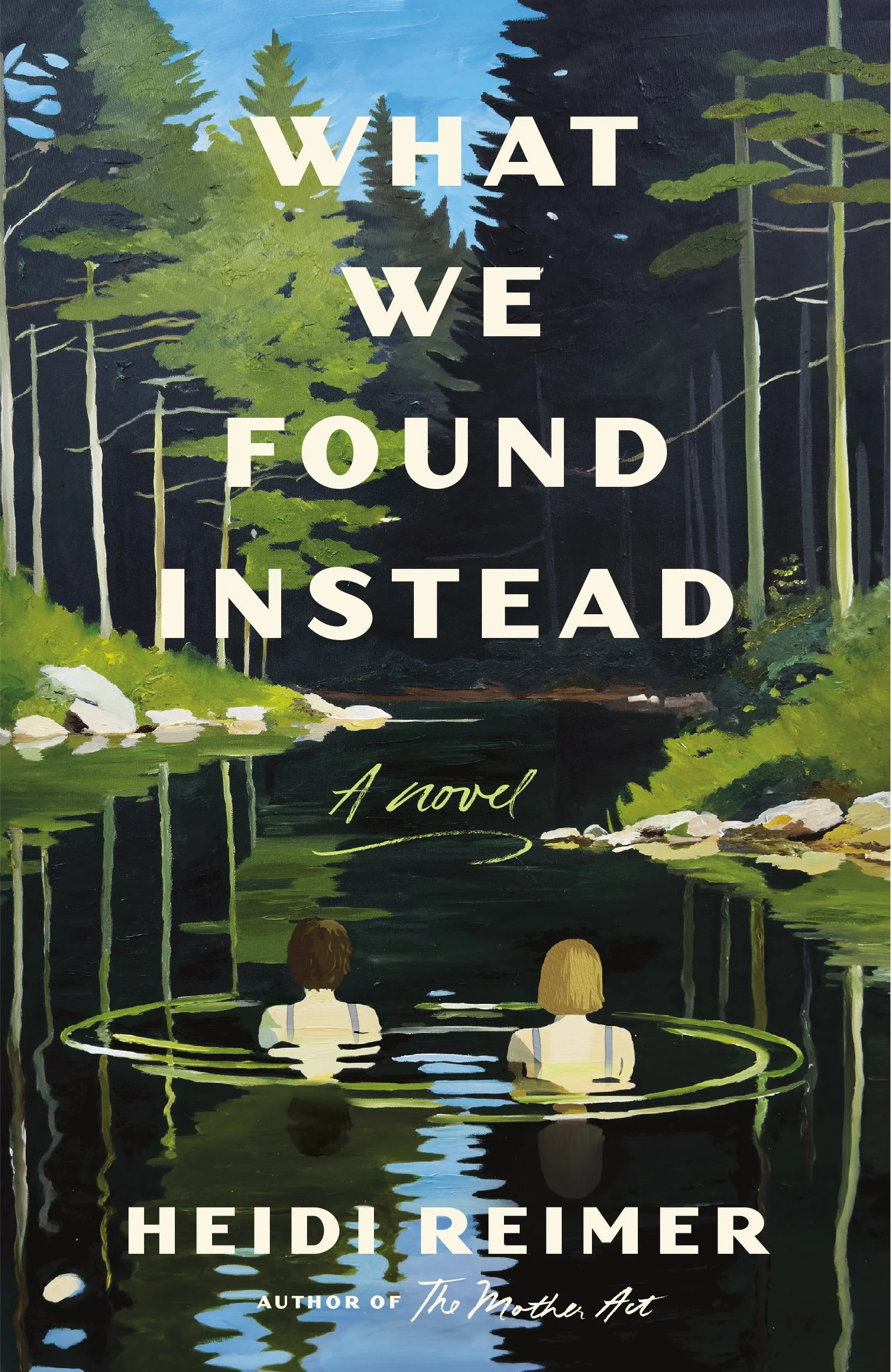
Heidi Reimer is a novelist and creative writing coach. Her debut novel, The Mother Act, received a starred review in Publishers Weekly, praise in the New York Times Book Review, and attention from CBC Radio’s The Next Chapter, Chatelaine, and People. Her second novel, What We Found Instead, arrives July 28, 2026—a story of two women who meet as romantic rivals and end up choosing each other. Early readers have called it “the rom-com I didn’t know I needed,” praising its “vulnerable strength” and “fierce fragility.” Heidi is a thoughtful and dynamic speaker and writer, available now for interviews or events.
“Reimer is truly a writer to watch.”
About What We Found Instead
A moving and compulsively readable novel about two very different women and the unlikely bond they forge in the wreckage of one man’s betrayal.
Maggie feels behind for thirty-five―still unsure about her career path, still living with roommates and struggling through a never-ending PhD―but at least she’s certain about her relationship with her boyfriend, Karl. That is until she hears the voicemail on Karl’s phone from some woman named Eve, who’s using words Maggie can’t process like baby, love, and tonight. In an instant, Maggie’s trust in Karl unravels, but she doesn’t know the whole truth―and only one person can help her find it: Eve.
Eve didn’t flee New York and the stress of running her handcrafted furniture business just to be dragged into someone else’s drama. She likes the quiet rhythm of her Northern Ontario lake life: her dog, her cozy home, her dependable routines―and Karl, at least on the weekends when he’s not working in Toronto. So when a stranger presses for a meeting, Eve is wary. She doesn’t like her earnestness, her probing questions, her expectation of solidarity. And she certainly doesn’t like the news Maggie delivers: Karl is her boyfriend too.
Maggie and Eve’s tense encounter upends both of their lives. They expect to never see each other again, but instead they’re thrown back together―forced to face their resentments and insecurities head-on, pushed into vulnerability with the one person whose very existence caused their heartbreak.
What We Found Instead is a captivating and insightful look at complex relationships and a love letter to female friendship, asking us to consider questions about love, loyalty, and what we owe to ourselves and to others.
Coming July 28, 2026.
Publication Details
-
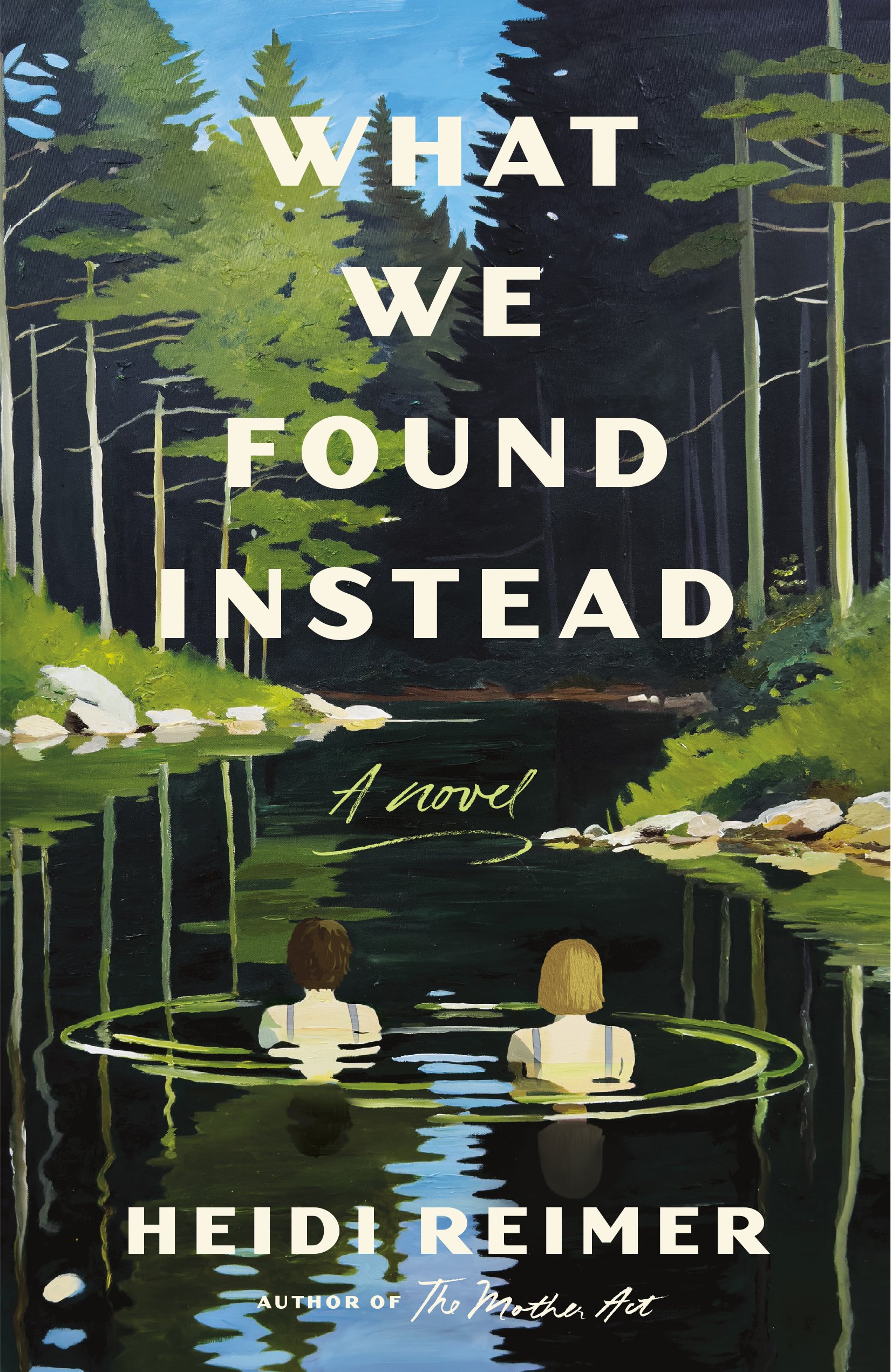
Canada
Title: What We Found Instead
Author: Heidi Reimer
Publisher: Random House Canada
On sale: July 28, 2026
List price: $24.95
Available from: Chapters-Indigo, Amazon, indie bookstores
Paperback: 352 pages | ISBN 9781039002227
Ebook: ISBN 9781039002210
Audiobook: Length TBC | ISBN 9781039002265
Publicitylnquiries: publicitycanada[at]penguinrandomhouse.com -
U.S.
Title: What We Found Instead
Author: Heidi Reimer
Publisher: Lake Union
On sale: July 28, 2026
List price: $16.99
Available from: Chapters-Indigo, Amazon, local indies
Paperback: 352 pages | ISBN 9781662539923
Ebook: ISBN 9781662539930
Audiobook: Length TBC | ISBN 9781039002265
Publicitylnquiries: amazonpublishing-pr[at]amazon.com
About Heidi Reimer
-
Heidi Reimer is a novelist, an essayist, and a writing coach at Sarah Selecky Writing School. Her novels include The Mother Act, a mother-daughter story set on the opening night of a one-woman show, and What We Found Instead, about the unlikely bond two women forge in the wreckage of one man’s betrayal. Her work has appeared in Chatelaine, The New Quarterly, Literary Mama, Lit Hub, and the anthologies The M Word: Conversations About Motherhood and Body & Soul: Stories for Skeptics and Seekers. She is from Northern Ontario and currently writes in a small town on the St. Lawrence River.
-
Heidi Reimer’s mission is to create immersive stories that make people feel expanded, deeply engaged, and more meaningfully connected. (It tends to be women, but she’s been surprised at how many men resonate with her work, too.)
The complexity of women's inner lives, the psychological legacies of childhood, the hunger to break free of what we're given…these are the obsessions of her life and, inevitably, her work. Her novels follow women in the act of becoming: shedding inherited beliefs, discovering what they actually want, and sometimes finding their most essential relationships in the last place they expected to look.
Heidi Reimer’s debut novel, The Mother Act, is a mother-daughter story that unfolds on the opening night of a one-woman show. The performer is a controversial feminist figure and outspoken critic of societal expectations of motherhood. Her estranged 24-year-old daughter is in the audience, watching her mother account for the choices that shaped her life. The biggest of these? Prioritizing her own ambition, personal needs, and creative fulfillment when she abandoned her as a toddler.
Her second novel, What We Found Instead, forthcoming July 2026, explores the unlikely bond two women forge in the wreckage of one man's betrayal. The story opens as Maggie discovers her boyfriend has a girlfriend she didn't know about. She tracks down the other woman, and as Maggie and Eve search for answers, mistrust slowly gives way to honesty, vulnerability, and an unexpected affinity. The novel is less about betrayal than about what happens when women choose connection over competition, even when doing so feels risky. It's a love story of sorts—platonic, and between the two women.
What We Found Instead had its beginning more than two decades ago, when Heidi first had the idea to throw two women together in a circumstance that ought to divide them—and see what would happen if it didn't. The seed of that question was already growing in her own life. Her closest friendship began when she and her now-best-friend, Anena, were both drawn to the same man. He chose her friend. What neither of them could have anticipated was that this was actually the beginning of something far more significant than any short-lived romance: a decades-long friendship in which they have supported each other to become themselves, worked through their wounds together, and figured out in tandem the kinds of women they wanted to be. The novel explores that kind of bond, the one that outlasts and outgrows almost everything else.
Heidi’s desire to be a novelist began in childhood, when she first realized at the age of eight that immersion in a novel was the very best thing in the world. She wrote stories freely until it came time to turn the lifelong dream into a grown-up reality…and the greatest pleasure of her life became hard. She spent her twenties writing and abandoning short stories and essays and novels and partial novels, travelled a bunch, supported herself as a waitress and office admin and bookseller and personal assistant, regularly defeated by her own self-doubt, perfectionism, and the fear that she didn’t have what it took.
In her thirties, she got an English degree, got married, got pregnant (and adopted a toddler on the same day, kind of). She grappled with marriage and motherhood inside the pages of the story that would become The Mother Act. She figured out how to partner sustainbly with the creative process and how to write a viable novel.
Along the way, she also deconstructed the wounds of a pretty hardcore patriarchal religious upbringing, shed beliefs that had confined and defined her, and found her way more deeply into herself. Which is a pretty big reason her characters are often on that kind of journey too, breaking free of expectation, untangling layers of indocrination and survival patterns, figuring out who they are.
Bringing The Mother Act to completion and then publication was a process riddled with obstacles, joy, purpose and tears. For a period of two years she abandoned the book due to what she thought was the unviability of the structure (taking place all on one night, but spanning decades—hard!). During a dark month of the soul in 2020 (but who didn’t have one of those in 2020?), she looked head-on at the question of whether she could be delusional and/or was one of those writers for whom it was just not going to happen. She had an excellent therapist helping her through this crisis, and for a while she seriously considered quitting writing and training to become a therapist. She came through it more certain than ever of the worth of her work, sourcing her value from within herself in a new and deeper way.
It was, in fact, fifteen minutes after weeping in a therapy session about her inability to get a novel published that she found out an editor at Random House Canada was interested in The Mother Act. From that moment, decades of quietly, invisibly trying and failing and yearning and learning to write began to grow into something bigger.
The Mother Act launched in April 2024. What We Found Instead is following close on its heels, arriving into the world July 28, 2026.
As the creator of Novel Alchemy and Novel Refinery, her group coaching programs at Sarah Selecky Writing School, Heidi also helps other writers identify and work through the self-doubt, fear, and creative blocks she knows so intimately from her own story. This is one of her greatest joys and a beautiful, heartfelt full circle.
-
Heidi: Hi-Dee (like her name is Dee, and you’re saying hi to her)
Reimer: Rye-mer (like the grain, followed by the first part of mermaid)
Listen to the pronunciation of Reimer here.
Sample Interview Questions & Answers
-
I grew up the eldest of six kids in a religious movement that valued motherhood as a woman’s highest calling, the vocation she was expected to devote her life to. I had other work I wanted to do. In my early twenties, my mantra became “Marriage and motherhood are the enemy of my dreams.” When I did eventually choose to become a mother (having already married and managed to hang onto my dreams), it was with a lot of careful thought and a good dose of fear about how I could be a mother without losing myself.
I felt invalidated by the general societal approval of my choice to mother, the disproportionate burden of labor placed on me versus my husband, and the glib assumptions about one of the most complex experiences of my life. I loved my daughters, I wanted them to have a nurturing and secure upbringing, I wanted to support them into becoming fully-realized women…and there were many days when I felt like devoting myself to this had sabotaged my own self-realization.
I couldn’t speak any of this. So I created a character, Sadie Jones, who is a lot more brazen than I am: Not only does she say it, but she chooses to leave her toddler to preserve her own self and her own dreams.
This story was always two-sided for me, though, and I also wanted to give full voice to a daughter whose mother prioritizes her own thriving. I was acutely aware of the inherent unsolvable dilemma in Sadie’s choice: When Sadie leaves, what does that do to Jude? I wrote this book to explore that dilemma.
-
This structure is one of the reasons I abandoned The Mother Act before I was halfway through the first draft! I believed I’d set myself an impossible challenge and that the story as I’d conceived it just wasn’t viable.
But whenever I talked about my failed manuscript, it was that very structure that people found compelling: the entire novel takes place on the opening night of a one-woman show. The mother, Sadie, is onstage; her estranged, now-grown daughter, Jude, is in the audience. In acts that alternate between each of their perspectives, the answers to two questions gradually unfold:
1) What exactly happened on the snowy February day when Sadie abandoned 18-month-old Jude?
2) Since Sadie has long since come back into Jude’s life and rebuilt their relationship, why are they estranged now?
But I couldn’t make it work! I gave up. For two years I considered it a failed experiment. Until the day I was driving to pick up my kids from school and happened to catch Sheila Heti on the radio talking about her novel Motherhood. I recognized many of my own themes in the questions her novel was asking. By the end of that day, I’d pulled The Mother Act out of the drawer and had begun actively working on it again. Sadie and Jude were still utterly captivating to me, but I realized I’d chosen the wrong parts of their story to tell. I kept the opening-night framework and the first act, chucked two others, and started over.
-
I was plunged into the world of theatre when I fell in love with an actor. I’d studied and written about Shakespeare myself, but our relationship gave me access to Shakespeare off the page, to the green rooms, dressing rooms, stages, and post-show pub sessions of actors who brought his work to life.
By the time I was halfway through the first draft of The Mother Act, my now-husband had become the artistic director of a summer Shakespeare Festival. He’d chosen The Taming of the Shrew and hired a feminist woman director to create a sensitive production of this problematic play.
My reaction to Shrew was pretty much like Sadie’s in the novel: It triggered every wound of a patriarchal upbringing in which I was implicitly and explicitly taught that because I was female, my God-given role was to listen, follow, and obey.
Female friends saw the production and were agog: this is supposed to be a love story? The female lead, also a playwright, had once been so infuriated by the play that she’d written her own in response, and the Festival held a staged reading of her version. I went out with the actors afterward to ask about and listen to their complicated feelings about taking part in a story whose plot is, at least on the surface, about taming a woman. They had all thought hard about the play, its subtexts and deeper messages. I still hated it.
Since both my main characters are actors, my vision for The Mother Act was to build each act around a play or other work of art. The Taming of the Shrew, clearly, had to be in the book.
It wasn’t until I was deep in revisions that I realized that Sadie’s own story mirrors Kate’s in The Taming of the Shrew. Like Kate, Sadie starts out a firecracker and is gradually tamed into a version of a woman more palatable to society—in Sadie’s case, by marriage, by motherhood, by the necessities of keeping a home and making a living.
But she doesn’t stay that way.
And though I didn’t consciously plan this, as the novel progresses, its acts move gradually from the plays of a dead white male to the creative work of the novel’s two female protagonists as they claim their own agency.
I do love Shakespeare, to be clear—but The Mother Act is in part about women centering their own stories, from their own points of view, which I think here in the twenty-first century is still a radical act.
-
Years ago I heard the novelist Tayari Jones say that she knew she had a story when she hit upon two characters who were on completely opposite sides of a question or situation…and who were both completely right.
That’s where fiction is interesting to me—not when we’re adjudicating whose side is more correct, but when we’re exploring deeply the nuances and contradictions of being a human in relationship with other humans.
There’s a point in The Mother Act where Jude says that her father can’t choose sides in the war between her and Sadie. “It’s the actor in him,” she says. “No one’s a villain; everyone’s their own protagonist. He has to be able to understand and inhabit the perspective of any character.”
That’s kind of how I feel when I’m writing…and I how I hope you might feel while reading.
-
Writing started to work for me when I found a balance between structure and freedom. Before this, I swung between two opposite extremes: 1) rigid and rule-bound, 100% analytical mind, and 2) all-intuition, all-play, all confusing aimlessness on the page as I refused to impose any kind of restrictions on my work.
The magic, at least for me, is in the middle path. Harnessing structure might mean using a story model or outline, or it might mean adopting systems, schedules, a consistent writing practice, and accountability that help you show up to write. When you have at least a few parameters to work within or guidelines to follow (or rebel against), when you make and honor a commitment to your work and your writing practice, you can start getting traction.
But don’t get too rigid! Because the paradox is that creativity also wants freedom. To stumble into something surprising and fresh, you can’t start out 100% certain what the result will be. To write a novel that’s sparkling and alive, you want to drop into something deeper, more mysterious, and more true than what your analytical brain can come up with. The right amount of structure can help you open up to that place, but you also don’t want to get in your own way with a list of structural or other rules.
Because the other part of the freedom key is to be willing to write badly, especially in the first draft. Focusing on process rather that product—as long as you’ve got a bit of a framework in place to hold you through the confusion—frees you to write with vitality, presence, and flow.
The Mother Act Themes—for Interviews, Panels, Conversations
Motherhood
Maternal ambivalence and/or rage
Societal pressure to mother
Biological & social demands on mothers
The ways that parenthood can send even the most progressive heterosexual couple back into traditional gender roles
The tensions inherent in trying to be both a dedicated artist and a dedicated parent
Daughterhood
The examples our mothers set for what is or isn’t possible, and the ways we react to, rebel against, or emulate those models
The quest to outrun a mother’s shadow & become our own person
Art, theater, & the creative drive
Voice & agency…whose story is it anyway?
The power of art to create an experience of empathy
Religious trauma & feminist awakening
Patriarchy’s long shadow
Gender roles and how we get over them (or don’t)
Claiming a feminist identity
Writing & the creative process
A circuitous literary journey and mid-life debuting (Heidi has been writing fiction since she was a kid planning to publish five novels by 30, which…um…is not quite what’s happened, a process she’s happy to be honest about)
Sample Interviews
Additional speaking, panel, interview, and reading experience includes:
St. Lawrence Writers Festival. Panel discussion -
Wordstock Sudbury. Panel discussion - Inner World of Women
Wild Writers Festival. Panel discussion - Shaming or Celebrating? Challenging Norms in Personal Nonfiction
Canadian Writers Summit. Panel discussion - Achieving Your Creative Dream: The Shadow Side
Brockton Writers Series. Guest speaker - How to Write a Novel in Ten Years: Total Rewrites, Massive Scrap Piles, and Persistence Through the Long Haul
Draft Reading Series
Common Readings
Anthology launches for Body & Soul: Stories for Skeptics and Seekers and The M Word: Conversations About Motherhood
Numerous virtual events and classes
Numerous live and recorded radio interviews, including The Richard Crouse Show, Brockville's BOUNCE 103.7, and Idaho Matters on Boise Public Radio.
High Resolution Photos

Photo credit: JEMMAN Photography

Photo credit: JEMMAN Photography

Photo credit: JEMMAN Photography

Cover design: Caroline Johnson
All photos may be downloaded and used for promotional purposes.
